

Last Updated: November 12, 2026
Quick Summary
Lion's mane may not produce noticeable effects because human research on memory and focus is small, short and mixed, and many reported benefits come from lab and animal studies. Common reasons people feel nothing include low dose, a short trial, unrealistic expectations, or a product form that delivers less mushroom material.
- Human trials are small and short, and their results on focus and memory are inconsistent.
- Give a label-consistent dose a fair trial of roughly two to three months before judging.
- Mycelium-on-grain products can contain substantial grain starch, diluting the mushroom content.
- Check for a batch-specific Certificate of Analysis confirming the product's identity and contaminant testing.
- Consult a healthcare provider before use if you take blood thinners, diabetes medication, or immunosuppressants.
Table of Contents
- What Clinical Research Says About Lion's Mane and Cognition
- Why You May Notice No Effects: A Troubleshooting Checklist
- How Much Lion's Mane Is Too Much, and Safety Considerations
- Checking Third-Party Lab Testing Before You Reassess Your Routine
- Deciding Your Next Step After a Fair Trial With No Benefit
- Frequently Asked Questions
What Clinical Research Says About Lion's Mane and Cognition
If you've taken lion's mane for weeks and noticed nothing, you are not alone, and the research gives a few reasons why.
National Center for Complementary and Integrative Health overview of Lion's mane is a useful starting point for understanding what has and hasn't been tested. Most of the interest comes from early laboratory and animal work on nerve growth factor, while human trials remain small and short.
Human trials versus animal and lab studies
Much of the enthusiasm around lion's mane comes from studies in cell cultures and rodents, where researchers measured nerve growth factor activity and memory performance in mazes. Those results are interesting, but they do not automatically translate to a healthy adult taking a capsule each morning.
Human randomized, placebo-controlled trials do exist, and some report modest improvements in subjective measures such as self-rated focus or processing speed.
Why the evidence is still mixed
The human results are inconsistent. Some trials show benefits on certain tests, while others show none, and differences in dose, product form and study population make direct comparisons difficult.
That is why a fair assessment needs realistic expectations. Lion's mane may support cognitive function for some people, but no one should assume it will produce a noticeable change for everyone.
Why You May Notice No Effects: A Troubleshooting Checklist
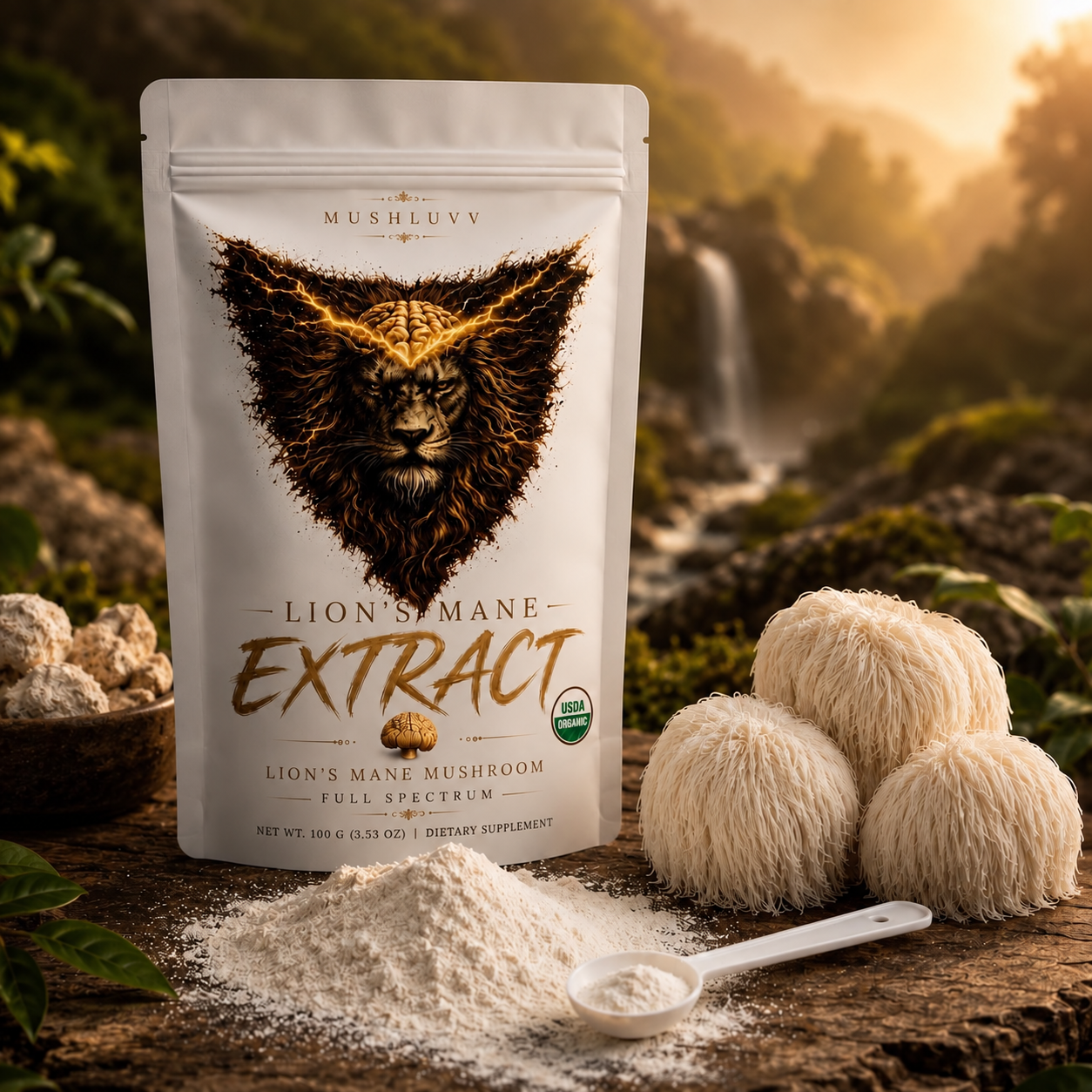
If you have taken a product consistently and felt nothing, work through the most common reasons below before deciding it failed. Once you are ready to test again, you can compare the Organic Lion's Mane Extract Powder product details, including its form and serving size.

What each extraction method targets
Hot water extraction pulls out water-soluble compounds, including polysaccharides such as beta-glucans, which are among the constituents most often discussed in research on immune and cognitive effects.
A simple hot water extract is not automatically inferior, it depends on what the product is designed to deliver, but a label that does not state the extraction method leaves you unable to tell which fraction you are getting.
Fruiting body versus mycelium on grain
This is the distinction that most affects what is actually in the capsule. Fruiting body products use the mushroom itself. Mycelium products use the root-like network grown on a grain substrate, and because the mycelium is harvested with the grain still attached, the final powder can contain a substantial share of starch from that substrate.
Labels vary in how clearly they disclose this. A label that says "mushroom powder" without specifying fruiting body or mycelium is a label you cannot fully evaluate.
Beta-glucan content and label transparency
Beta-glucans are the polysaccharide most often used as a marker of quality because they can be measured. A product that reports beta-glucan content as a percentage of the finished powder gives you a number to compare across brands; a product that reports only total polysaccharides is using a broader measure that can include starch-derived compounds.
Watch out: a high beta-glucan percentage on a mycelium product can reflect grain-derived beta-glucans rather than mushroom-derived ones, so read the label's stated source alongside the number.
How to compare two labels side by side
Start with the serving size in milligrams or grams, not the scoop size, since scoops vary.
[PAGE_LINK: Dual Extracted Lion's Mane: Benefits and What to Know | page:2]
Our Dual Extracted Lion's Mane page explains how those methods differ in practice, and it is worth reading before you compare labels.
The table below summarises how each extraction and product-form choice affects what ends up in the capsule.
| Option | Best for | Key difference |
|---|---|---|
| Hot water extraction | Water-soluble compounds | Pulls out polysaccharides such as beta-glucans |
| Alcohol extraction | Alcohol-soluble compounds | Pulls out hericenones and erinacines |
| Dual extraction | Broader constituent range | Runs material through both solvents |
| Fruiting body | Mushroom material itself | Uses the mushroom without grain substrate |
| Mycelium on grain | Mycelium-based products | Substrate starch can dilute mushroom content |
How Much Lion's Mane Is Too Much, and Safety Considerations
Lion's mane is generally considered well tolerated in the studies reviewed, but tolerability is not the same as suitability for everyone.
What the research reports
In human trials, the most commonly reported issues are digestive discomfort, such as mild stomach upset, and occasional headache. Serious reactions are rare in the published literature. Some people report an allergic reaction, particularly if they are sensitive to mushrooms generally, which can include skin reactions or breathing difficulty. Stop use and speak with a healthcare provider if you notice any unusual symptoms.
Dose: more is not faster
Do not assume that a higher dose will produce faster results. Human trials have used a range of daily amounts, and the studies are too small and too varied to establish a dose that reliably produces noticeable effects. Follow the serving size on the label, and if you are considering a higher amount, discuss it with your doctor first. Taking more than the label suggests does not shorten the timeline, and it increases the chance of digestive upset.
Interactions and higher-risk groups
This is where the decision to continue deserves the most care. Lion's mane may affect how the body handles some medications, and the evidence on interactions is limited, which means caution rather than confidence is the right posture.
Watch out: if you are taking a prescription medication and have noticed no benefit from lion's mane, the safest course is to discuss whether to continue with the clinician who manages that medication rather than stopping or continuing on your own.
Connecting safety to the continue-or-stop decision
If you have taken a label-consistent dose for a fair trial and noticed nothing, the safety profile does not create a reason to keep going. A supplement that is well tolerated but produces no benefit is still a cost with no return, and indefinite use based on online claims rather than your own experience is the pattern to avoid.
If you want to try a full-spectrum powder, our [PAGE_LINK: Organic Lion's Mane Extract Powder | page:1] describes the product on its product page.
Checking Third-Party Lab Testing Before You Reassess Your Routine
Before deciding whether the problem is the supplement, confirm the product is what the label says. Our guide to why third-party lab testing matters explains what the results cover and how to read them.
[PAGE_LINK: Why Does Third-Party Lab Testing Matter? | page:3]
MushLuvv's products are independently lab tested, and a Certificate of Analysis (COA) is available through the QR code on the product. When you review a COA, check the batch number against your bottle, confirm the test date is recent, and look for results on heavy metals and pesticides.
Deciding Your Next Step After a Fair Trial With No Benefit
After a fair trial of roughly two to three months at a label-consistent dose, with a verified product and realistic expectations, you have a clear decision. If you want a same-topic cost-benefit view before you commit, see whether lion's mane supplements are worth the price. If you noticed nothing, it is reasonable to stop and save your money. You can also try a different product form, but change only one variable at a time so you know what made the difference.
[PAGE_LINK: Is Lion's Mane Supplement Worth the Price? | page:4]
Stopping is a valid outcome. Lion's mane is not a requirement for cognitive health, and the research on it is still developing.
Lion's mane isn't a guaranteed fix, and we'd rather say so. If you want to test it properly, start with a verified product, a sensible dose, and an honest timeline. SHOP MUSHLUVV for lab-tested Lion's Mane extract and check the COA on every batch.
Frequently Asked Questions
Can you feel the effects of lion's mane right away?
Usually not in a way you can clearly attribute to the supplement. Most of the human trials that reported cognitive outcomes ran for several weeks to months, and researchers measured change against a baseline rather than day-to-day sensations. Some people report feeling more alert within days, but the clinical evidence does not support fast, reliable effects. If you are expecting a noticeable change within the first few doses, you are likely to be disappointed even if the supplement is doing something. Track your routine over several weeks before drawing conclusions about lion's mane.
How much lion's mane is too much?
Most supplement labels and clinical studies use daily amounts in the low-gram range, and the dose used in a given study is the most useful reference point. More is not automatically better, and taking far above a labeled serving does not reliably produce stronger results. Check the serving size on your product, compare it with the dose used in the research you are reading, and follow the label. If you take other supplements or medications, or have a medical condition, ask a healthcare provider what amount is appropriate for you.
Why do I feel weird after taking lion's mane?
Mild digestive discomfort, changes in appetite, and skin reactions have been reported in some users, and a mushroom allergy can cause a reaction in susceptible people. These are uncommon, but they are a reason to stop and talk with a healthcare provider if symptoms persist or are severe. Starting with a smaller serving and taking it with food can help you judge tolerability. Do not assume a strange feeling is a sign the supplement is working.
Does third-party lab testing actually matter for lion's mane?
It matters because supplements are not reviewed for effectiveness or purity before sale in the way prescription drugs are. Independent testing for heavy metals, contaminants and identity can show whether the product contains what the label says. MushLuvv products are independently tested by third-party laboratories, and a Certificate of Analysis is available through the QR code on packaging. Reading the COA lets you check results yourself rather than relying on marketing claims.
