

Last Updated: October 28, 2026
Quick Summary
Dual extracted lion's mane is a supplement made by running the mushroom through hot water and then alcohol, so both water-soluble and alcohol-soluble compounds end up in the product. This describes how it is made, not how well it works. Research on its benefits for cognition, mood and nerves is still limited.
- Dual extraction uses one hot water step and one alcohol step to capture two compound groups.
- Check the label for fruiting body versus mycelium, since they are different materials.
- Mechanism findings in cells and animals do not prove effects in people.
- Look for a batch-specific Certificate of Analysis reporting beta-glucans and heavy metals.
- Anyone with a diagnosed condition should ask a clinician before starting the supplement.
Table of Contents
- What Dual Extracted Lion's Mane Actually Is
- Why Extraction Methods Matter: Water, Alcohol, and Lion's Mane Extraction Methods
- Potential Benefits of Dual Extracted Lion's Mane for Cognition, Mood, and Nerves
- Lion's Mane Extract vs Powder: Which Form Delivers More
- Lion's Mane Side Effects, Interactions, and Safety Considerations
- How to Choose Lion's Mane Supplements Wisely
- Trying Dual Extracted Lion's Mane: Setting Realistic Expectations and Next Steps
- Frequently Asked Questions
What Dual Extracted Lion's Mane Actually Is
Dual extracted lion's mane is a supplement made by running the mushroom's fruiting body through two extraction steps, one hot water and one alcohol, so both water-soluble and alcohol-soluble compounds end up in the final product, a fuller spectrum than a single-solvent extract.
The fruiting body is the mushroom part typically used for supplements; mycelium, the root-like network the fungus grows, is a different material, so check which one a label uses. Our own Lion's Brain line is a 100% fruiting body product with no fillers or mycelium.
Keep in mind that "dual extracted" is a manufacturing description, not a guarantee of results: it tells you how the product was made, not how well it works.
Why Extraction Methods Matter: Water, Alcohol, and Lion's Mane Extraction Methods
Lion's Mane contains two broad groups of compounds that dissolve differently. Polysaccharides, including beta-glucans, are generally water-soluble, while many terpenoid-type compounds, including the hericenones and erinacines researchers often discuss, are more soluble in alcohol. A hot-water extract and an ethanol extract therefore capture different portions of the mushroom.
That is why extraction matters: a single-solvent extract is a partial picture of the fruiting body, while a dual extract attempts to capture both fractions. Whether that makes a meaningful difference for any given outcome is a separate question the research has not settled.
Powder, by contrast, is the whole fruiting body dried and ground, including the largely indigestible chitin in the cell walls. Extraction concentrates the soluble compounds and removes some of that fiber, a trade-off covered in the comparison section below.
Potential Benefits of Dual Extracted Lion's Mane for Cognition, Mood, and Nerves
Most of the interest in Lion's Mane centers on the brain, the nerves, and mood. The honest framing: a plausible mechanistic story, a small and uneven human evidence base, and a large body of user reports. Dual extraction matters only insofar as it changes what compounds reach the final product, it does not create new clinical evidence.
The Compound-to-Mechanism Chain
That chain has weak links: cell and animal models do not reliably predict human outcomes, oral bioavailability is not well characterized, and lab doses do not map cleanly onto supplement servings. A dual extract may capture more alcohol-soluble terpenoids than a water-only extract, a composition argument, not a proof-of-effect argument.
Cognitive Function and Memory: What Human Studies Actually Show
If you see a claim about dramatic memory improvement, treat it skeptically. The better question is whether a specific product has been tested in a specific population at a specific dose, and most have not.
Mood, Anxiety, and Nerve Health
Nerve regeneration is a separate research thread. Animal studies have examined whether Lion's Mane compounds support nerve repair after injury, and the findings are encouraging as a research direction, but they do not establish that a supplement will help a person's nerves recover. Anyone with a nerve injury should be under clinical care rather than self-treating.
What Dual Extraction Adds, and What It Doesn't
That does not make dual extraction meaningless. The benefit case rests on two separate questions: (1) does Lion's Mane help, and (2) does dual extraction deliver a more complete version of it? The first is under study; the second is a reasonable inference from chemistry, not a proven clinical advantage.
Realistic Expectations and Timelines
PubMed search for Lion's Mane clinical trials
Lion's Mane Extract vs Powder: Which Form Delivers More
The honest answer depends on what you are measuring. Extracts are concentrated and more standardized per gram, which is why they often cost more per serving. Powder keeps the full fruiting body, including fiber and compounds that water and alcohol do not pull out.
Our Organic Lion's Mane Extract Powder, 100g, is a full fruiting body product, so you get the whole mushroom in powder form. A dual extract captures the soluble fractions more deliberately. Neither form is automatically superior. Choose based on whether you want a concentrated, extraction-focused product or the complete mushroom, and check the label for how much active material each serving contains.
Lion's Mane Side Effects, Interactions, and Safety Considerations
This section is general information, not medical advice. If you have an existing health condition, a clinician who knows your history is the right person to ask.
How to Choose Lion's Mane Supplements Wisely
Most buying guides tell you to "check the label" and stop there. A more useful approach evaluates a product on five checkable dimensions: species and part, extraction method and ratio, measured beta-glucans, third-party testing scope, and serving economics.
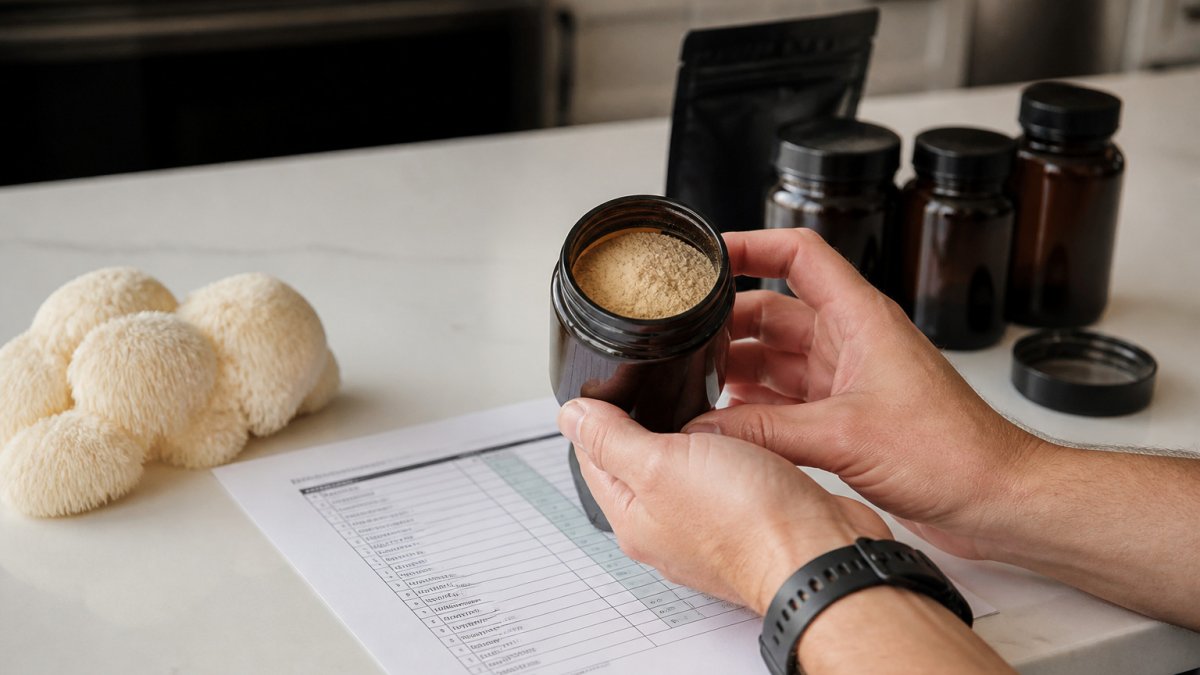
1. Species and Part Used
The relevant species is Hericium erinaceus, and labels sometimes list only "Lion's Mane" without it, making verification impossible. Equally important is the part: fruiting body, mycelium, or a blend. Mycelium products are often grown on grain, which can end up in the final powder and dilute the mushroom material; fruiting-body products avoid that issue. A label disclosing both is a baseline signal of a serious manufacturer.
2. Extraction Method and Ratio
"Dual extracted" should be paired with details: which solvents, in what order, and at what ratio. A stated ratio such as 8:1 or 10:1 means roughly that many parts raw mushroom to one part extract, a rough concentration indicator, not a potency guarantee, since a high ratio can also reflect a dilute starting material. What matters more is whether the label states the extraction method at all and whether the product is standardized to a measured compound.
3. Beta-Glucan Testing
Beta-glucans are a key water-soluble polysaccharide fraction, and they are measurable. A credible product reports beta-glucan content as a percentage or in milligrams per serving, ideally from an independent lab. Some older methods overstate beta-glucans by counting other polysaccharides, so a lab report specifying the assay method is more trustworthy than a bare number on a label.
4. Third-Party Testing Scope
Independent testing should cover more than potency: heavy metals, pesticides, microbial contamination, and residual solvents from extraction. A Certificate of Analysis (CoA) tied to a specific batch, not a generic brand-level claim, is the standard to look for. If a CoA is available by QR code or lot number, scan it and confirm the batch matches the product you are holding.
5. Serving Economics
Compare products per serving and per gram of verified material, not per bottle. A larger bottle at a lower sticker price can be more expensive per serving if the serving size is larger or the material is less concentrated, so check current prices directly rather than comparing sticker prices across brands.
Head-to-Head: Fruiting-Body Powder vs. Mycelium vs. Water Extract vs. Alcohol Extract vs. Dual Extract
| Form | What it contains | Best for | Watch-outs |
|---|---|---|---|
| Fruiting-body powder | Whole dried mushroom, including chitin fiber | People who want the complete mushroom | Lower concentration per gram; chitin is largely indigestible |
| Mycelium | Root-like network, often grown on grain | Products where mycelium compounds (erinacines) are the focus | Grain filler can dilute the material; check for "mycelium on grain" disclosure |
| Water extract | Water-soluble polysaccharides, including beta-glucans | Buyers focused on polysaccharide content | Misses alcohol-soluble terpenoids |
| Alcohol extract | Alcohol-soluble terpenoids, including hericenones | Buyers focused on terpenoid content | Misses water-soluble polysaccharides |
| Dual extract | Both fractions, captured in two steps | Buyers who want a broader spectrum in one product | Method alone does not prove superiority; verify beta-glucans and testing |
Putting It Together
A strong product discloses species and part, states the extraction method and ratio, reports measured beta-glucans, and backs it with a batch-specific third-party CoA. A weak product leans on the phrase "dual extracted" without those specifics. Treat any missing item as a reason to keep looking rather than a reason to assume the best.
Trying Dual Extracted Lion's Mane: Setting Realistic Expectations and Next Steps
If you are curious about another product, our Methylene Blue 1% Solution is another option we offer.
Your next step is simple: read the Certificate of Analysis for the batch you are considering, confirm the form and serving size match what you need, and start with the directions on the label.
Frequently Asked Questions
Is dual extracted lion's mane better than a single extract?
Dual extraction uses both hot water and alcohol, which is designed to capture both water-soluble polysaccharides and alcohol-soluble compounds such as hericenones and erinacines. A single water extract may miss some of the alcohol-soluble compounds. Direct head-to-head human evidence comparing dual and single extracts is limited, so the advantage is best understood as a broader compound profile rather than proven superior results. Checking the label for extraction method and third-party testing helps you compare products on what is actually verifiable.
What are the downsides or side effects of lion's mane?
Lion's mane is generally well tolerated in short-term studies, but reported side effects can include digestive discomfort, and allergic reactions are possible, especially for people sensitive to mushrooms. Because human safety data is limited, people who are pregnant, nursing, managing a medical condition, or taking blood-thinning or blood-sugar medications should speak with a healthcare provider before starting. Stop use and seek medical care if you notice rash, swelling, or breathing difficulty.
How long does lion's mane take to work?
Timelines vary, and most available studies that report cognitive outcomes ran for several weeks to months rather than days. Many people who report noticing changes describe a gradual shift over several weeks of consistent daily use. Results are not guaranteed, and individual responses differ. Set a realistic evaluation window of at least four to twelve weeks before judging whether a product works for you.
Does lion's mane give you a high?
Lion's mane is not a stimulant and is not expected to produce a euphoric high. Unlike caffeine or many stimulant-based energy products, it is not designed to create a rush followed by a crash. Any noticeable effects are typically described as subtle changes in focus or calm. If you experience unusual symptoms after taking it, stop use and consult a healthcare professional.
